Finding Peace in the Afterschool chaos
We’ve all been there. The kids burst through the door, backpacks hit the floor with a thud, and the afternoon spirals into a chaotic mix of snacking, screen-time battles, and last-minute homework panic. Transitioning from the high demands of the classroom to the safe space of home is tough. Implementing a structured after-school flow has been a game-changer in our home, helping Riley and Lucas transition with intention, peace, and confidence.
Why Predictability Empowers Neurodivergent Minds
Creating a routine while your kids are young isn't just about keeping the house tidy; it's a lifeline for emotional regulation. For neurodivergent children—who may experience executive dysfunction or sensory overload—the unpredictability of unstructured time can trigger deep anxiety.
A predictable, visual routine provides a safe container. It eliminates decision fatigue and clearly outlines expectations, which inherently lowers stress. When we integrate cognitive and behavioral concepts—like validating that "I can do hard things" while tackling a transition—we help children map their emotional responses. They learn that taking care of responsibilities first provides the emotional and physical space to truly relax later.
Our Step-by-Step Afternoon Flow
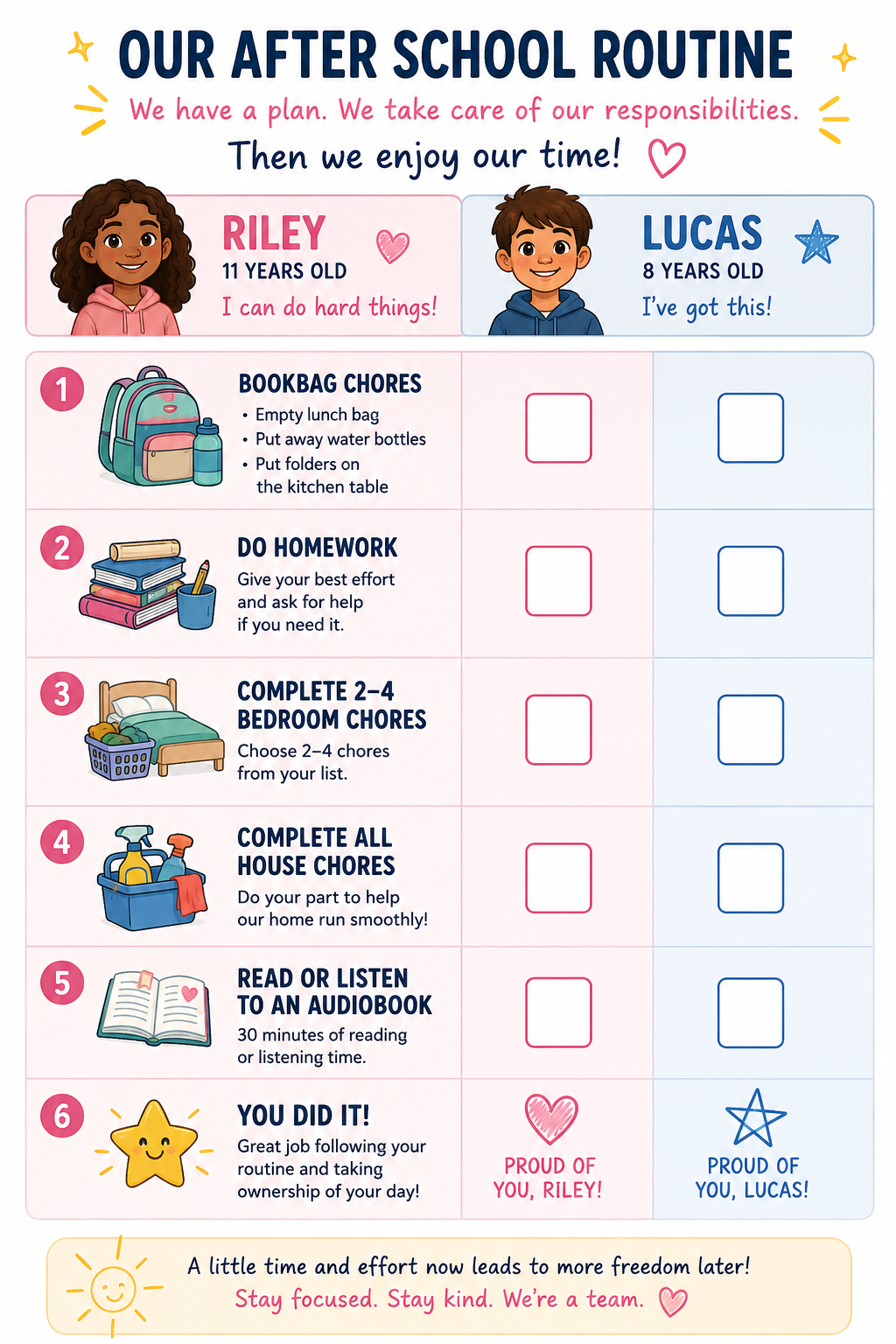
If you want to see exactly how we provide this visual structure, take a look at the "Kids after school routine.png" file. Breaking the afternoon into visually clear, bite-sized steps removes the daily friction:
Bookbag Chores: The transition starts by resetting for tomorrow. Emptying the lunch bag, putting away water bottles, and setting folders on the kitchen table provides an immediate, low-demand win.
Homework: Giving their best effort right away, and knowing it is always okay to ask for help when they hit a wall.
Bedroom & House Chores: Choosing 2–4 personal chores and completing household tasks reinforces that we are a team, and everyone does their part.
Quiet Decompression: 30 minutes of reading or listening to an audiobook serves as a dedicated sensory break.
The Reward: Checking off that final star gives them a massive sense of pride, ownership, and unlocks their free time.
The Friday Menu Review: Banishing Sunday Night Lunchbox Panic
We all know that sinking feeling. It’s 8:00 PM on Sunday, the weekend is slipping away, and you suddenly realize you have no idea what’s going into tomorrow’s lunchboxes. The frantic scramble through the pantry to find something—anything—resembling a balanced meal is the exact opposite of the peaceful, intentional family life we strive for.
The secret to eliminating that urgency isn't waking up earlier on Monday; it's shifting your timeline to the end of the prior week.
Step 1: The Friday Afternoon Huddle
Before the weekend even officially begins, sit down with your kids to review the upcoming school lunch menu. This simple habit completely transforms the flow of your week.
By looking at the school's options together, you can map out exactly which days they want to buy a hot lunch at school and which days they prefer to bring a lunch from home. This eliminates the daily morning negotiations and gives your child a sense of autonomy. When children have a voice in what they eat, they are far less likely to bring home a half-eaten sandwich.
Step 2: Providing Visual Home Lunch Ideas
For the days they opt for a packed lunch, don't just ask, "What do you want?" Open-ended questions can cause decision fatigue, especially for neurodivergent kids who thrive on clear choices.
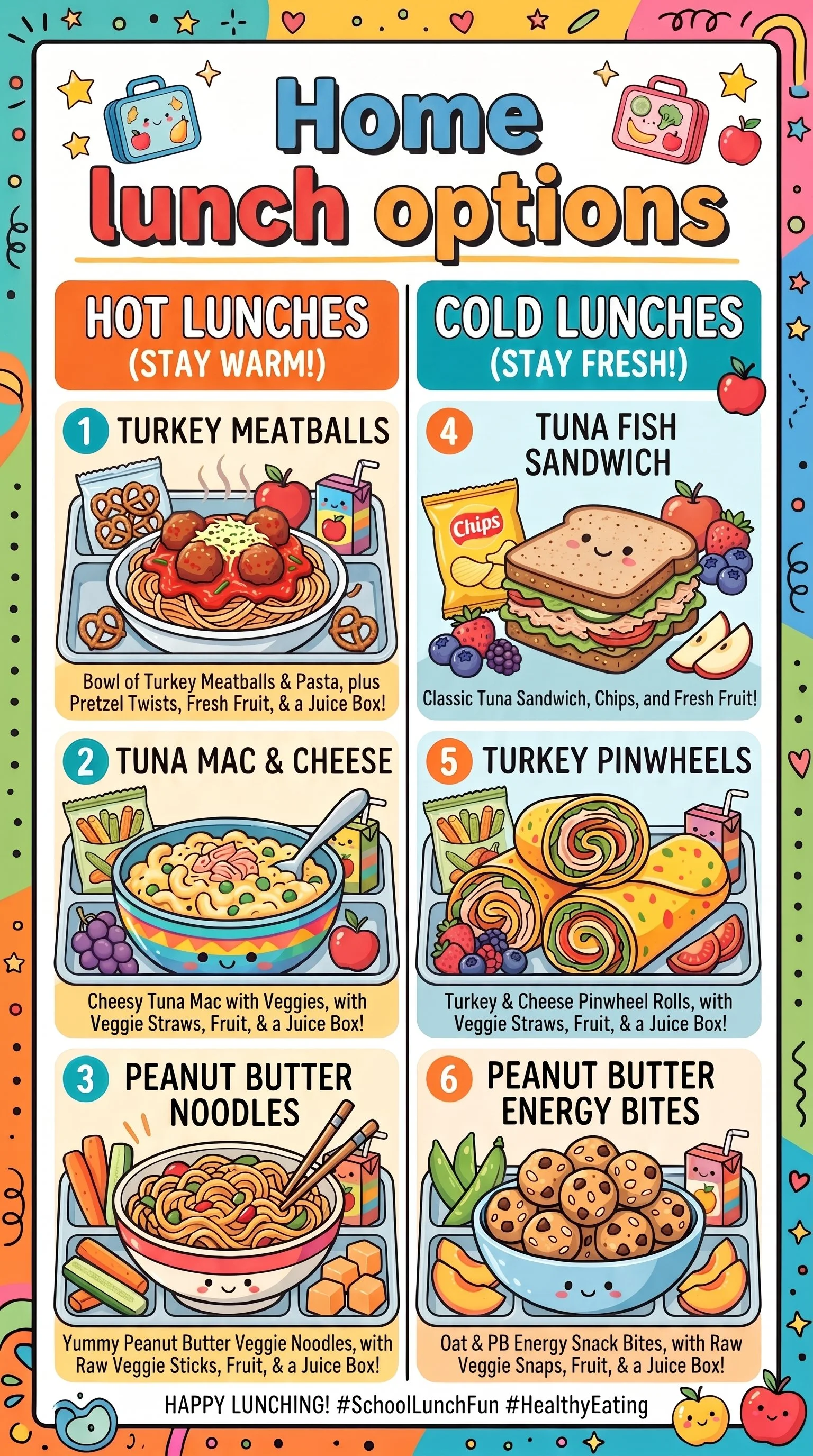
Instead, provide them with a curated visual menu of home lunch ideas. Let them choose between a cold Tuna Fish Sandwich or a warm thermos of Peanut Butter Veggie Noodles. Offering a structured set of options empowers them to make independent choices while ensuring you aren't playing the role of a short-order cook.
Step 3: Shopping Without Urgency
Once the week's lunch plan is locked in on Friday, you've just bought yourself the ultimate luxury: time.
Knowing exactly what ingredients you need allows you to approach your weekend grocery shopping with total clarity. Whether you enjoy browsing the aisles on a quiet Saturday morning or you prefer the automated ease of scheduling a grocery delivery order straight to your door, you can execute the plan without a drop of urgency. You buy exactly what you need, reducing food waste and saving money.
When the groceries are stocked and the menu is set, the rest of the weekend is yours. Sunday nights can return to being a time of rest and connection, rather than a frantic dash to prepare for Monday.
Fueling the Routine
You’ll notice the very first task in our flow is emptying the lunch bag. To make your mornings just as seamless as these afternoons, having reliable, go-to meals is essential.
Keep the "Parents quick recipe guide for home lunch options.jpg" handy for simple, step-by-step meal prep (the Peanut Butter Energy Bites are a fantastic sensory-friendly snack!). For a fun, colorful guide to share directly with your kids so they can practice autonomous decision-making, the "Home lunch options for kids.jpg" is perfect. Having these meals planned out makes those afternoon "bookbag chores" feel like part of a larger, supportive family system.
What specific transition during the day seems to cause the most sensory or emotional friction for your child?
Ready to completely transform how your household runs and eliminate the daily friction? It starts with understanding exactly where your family's current systems are breaking down. Take my free Household Leadership Quiz to find out your score today! As soon as you finish, you’ll be taken straight to either a digital product or my calendar to book a 1-on-1 Zoom strategy session with me—no waiting for an email link, just immediate action so we can start building a customized flow for your family.
